
Dr. Mariana, Orthodontist, Answers the Most Frequently Asked Questions About Braces
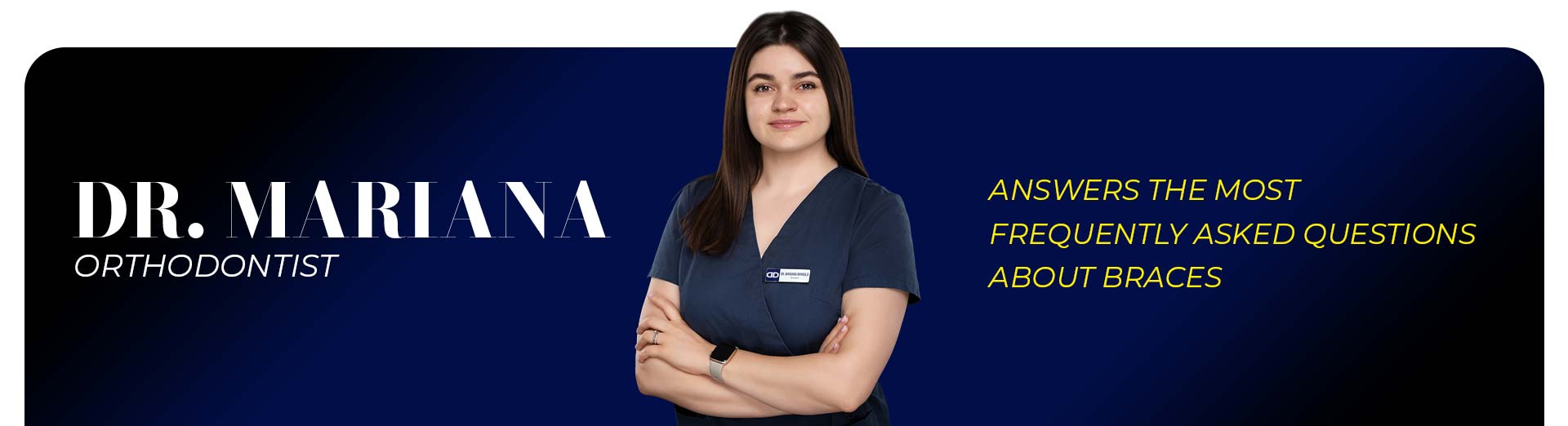
In the Republic of Moldova, more and more patients are choosing orthodontic treatment with braces to achieve a healthy, harmonious, and functional smile. Braces represent one of the most effective methods for straightening teeth and are recommended for both adolescents and adults.
Straightening your teeth is an investment in your dental health. It prevents a wide range of issues, such as cavities, gingivitis, dental wear, and more.
We invited Dr. Mariana, an experienced orthodontist, to answer the most common questions patients have. With her calm, clear, and patient-centered approach, she manages to explain even the most complex aspects of orthodontic treatment with ease.


If I’m over 35, can I still wear braces?
Absolutely — yes!
There is no age limit in orthodontics. More and more adults are choosing to align their teeth to achieve a beautiful smile and a correct bite. Orthodontic treatment can be successful at any age, as long as the teeth and supporting structures (bone and gums) are healthy. In adults, tooth movement may be slightly slower, so treatment duration can be longer compared to treatment for children.
Still, modern orthodontics is comfortable, discreet, and tailored to each patient’s needs — whether aesthetic or functional. The results can be remarkable — at any age.
How long does orthodontic treatment take?
This depends on the complexity of each case, but generally, it ranges between 12 and 24 months. With proper oral hygiene, regular check-ups, and positive cooperation with your doctor, treatment can progress efficiently, and results may become noticeable within just a few months.
At what age is an orthodontic check-up recommended?
The first orthodontic check-up is recommended around the age of 6-7, when the first permanent molars erupt. This allows for the early detection of any potential bite and jaw growth problems and, if necessary, the planning of interceptive treatment.
Which type of braces do I need: metal, ceramic, or sapphire? What about self-ligating systems?
Today, there are many types of appliances designed to meet each patient’s functional and aesthetic needs. Modern orthodontics offers fully personalized solutions.
Every patient is unique, which is why the orthodontist selects the most suitable appliance — whether metal, ceramic, or sapphire — based on aesthetic preferences and comfort.
For those seeking a nearly invisible option, clear aligners (such as OLA aligners) offer a modern and discreet alternative that many adults choose for their convenience.
Why do I need braces if my teeth look straight?
A smile that seems straight does not necessarily mean a correct bite. Proper occlusion is essential for the health of the temporomandibular joint (TMJ), the gums, and for the long-term stability of the teeth, helping prevent various dental issues.
Orthodontic treatment improves not only aesthetics but also bite balance, dental function, posture, and even speech. A perfectly aligned smile enhances confidence and overall facial harmony.
Can I wear braces on only one arch?
In very simple cases, yes — but this is more the exception than the rule. In most situations, orthodontists recommend treating both arches to achieve a correct and stable bite. Even a slight crowding on one arch is often the result of a mismatch between the upper and lower jaws and requires a well-planned, comprehensive approach.
Do I need tooth extractions (for example, wisdom teeth) before getting braces?
Most orthodontic treatments do not require extractions. They are recommended only when there is insufficient space for alignment or when wisdom teeth may negatively affect long-term results.
The decision is always personalized, based on X-rays and a detailed analysis of the case and treatment plan. The goal is to achieve a beautiful, stable, and healthy smile with the least invasive approach possible.
Orthodontic treatment during pregnancy — is it allowed?
Yes, orthodontic treatment is allowed during pregnancy, with careful monitoring and minor adjustments if needed. If treatment was started beforehand, it can be safely continued — avoiding X-rays and reducing unnecessary appointments.
Maintaining excellent oral hygiene is extremely important, as gums may be more sensitive during pregnancy. Your smile deserves care even during life’s most beautiful stages!
What foods should I avoid while wearing braces?
You should avoid very hard foods (nuts, hard pretzels, popcorn) and sticky foods (caramels, chewing gum), as they can damage the braces. Fruits and vegetables are safe, but they should be cut into small pieces. With these simple habits, orthodontic treatment remains comfortable and effective.
What is a retainer and how long do I need to wear it?
A retainer is an essential appliance used after orthodontic treatment to maintain the teeth in their corrected position. It is placed immediately after the braces or aligners are removed and can be fixed or removable.
The minimum recommended retention period is 12 months, but long-term use — typically 2 to 5 years — is advised, with regular follow-ups with your orthodontist.
Do you have a question?
Would you like more details about straightening your teeth with braces?
Fill out the form below, and Dr. Mariana and the Dentus Dentino team will get back to you ⤵️
Контакты:
+373 68 300 002
+373 79 735 139 (Telegram, Viber, WhatsApp)
Что нужно знать о Стоматологическом центре Dentus Dentino:
✓ 11 лет деятельности
✓ 45.000+ счастливых пациентов
✓ 10.000+ установленных брекетов
✓ 5000+ установленных элайнеров
✓ 2000+ отзывов пациентов в Google
✓ Видеоотзывы пациентов можно найти здесь


Comments are closed.